
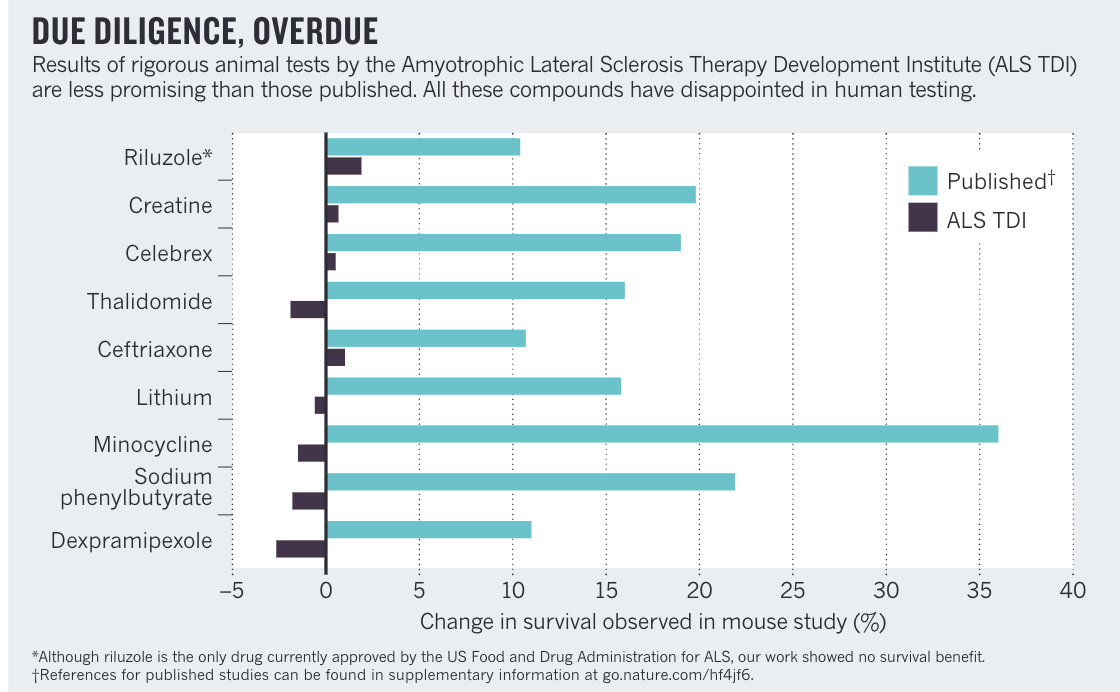
Summary: Many promising treatments fail in human clinical trials because preclinical animal studies are often poorly designed. Although over 80% of drugs that succeed in animal studies fail in humans, this discordance is often due to poorly designed preclinical research rather than the animal models themselves. Weak animal studies can lead to costly and ineffective clinical trials, wasting money and valuable time for patients with terminal illnesses. In ALS research, successes inspired new guidelines to improve animal testing by using better disease assessment, monitoring, and statistical models. While these methods require more time and resources, they reduce false positives and help prevent unnecessary clinical trials, ultimately saving both money and lives.
Recommendation 1: Create standardized international guidelines for animal experiments to improve consistency and reliability across studies. Know each mouse model’s strengths and weaknesses.
Recommendation 2: Publish negative or failed results so other researchers can learn from them and avoid repeating unsuccessful experiments.
Our Perspective: Standardized guidelines for animal experiments are being created and updated, such as the ARRIVE Guidelines, which is a checklist of recommendations for the transparent and full reporting of research on live beings. In academics, pharmacologists who can interpolate human and preclinical drug dosing/drug exposure are exceedingly rare – and worth public investment for workforce training.
The Conclusion? Improving the quality of preclinical animal studies is essential for developing safer and more effective treatments. Better research methods can reduce failed clinical trials, save valuable resources, and give patients a greater chance of benefiting from new therapies.