
AACR … from Sidney Farber’s leukemia pioneership to 2026
The American Association for Cancer Research (AACR), the world’s largest organization focused on cancer research, released its annual report on pediatric cancer progress.
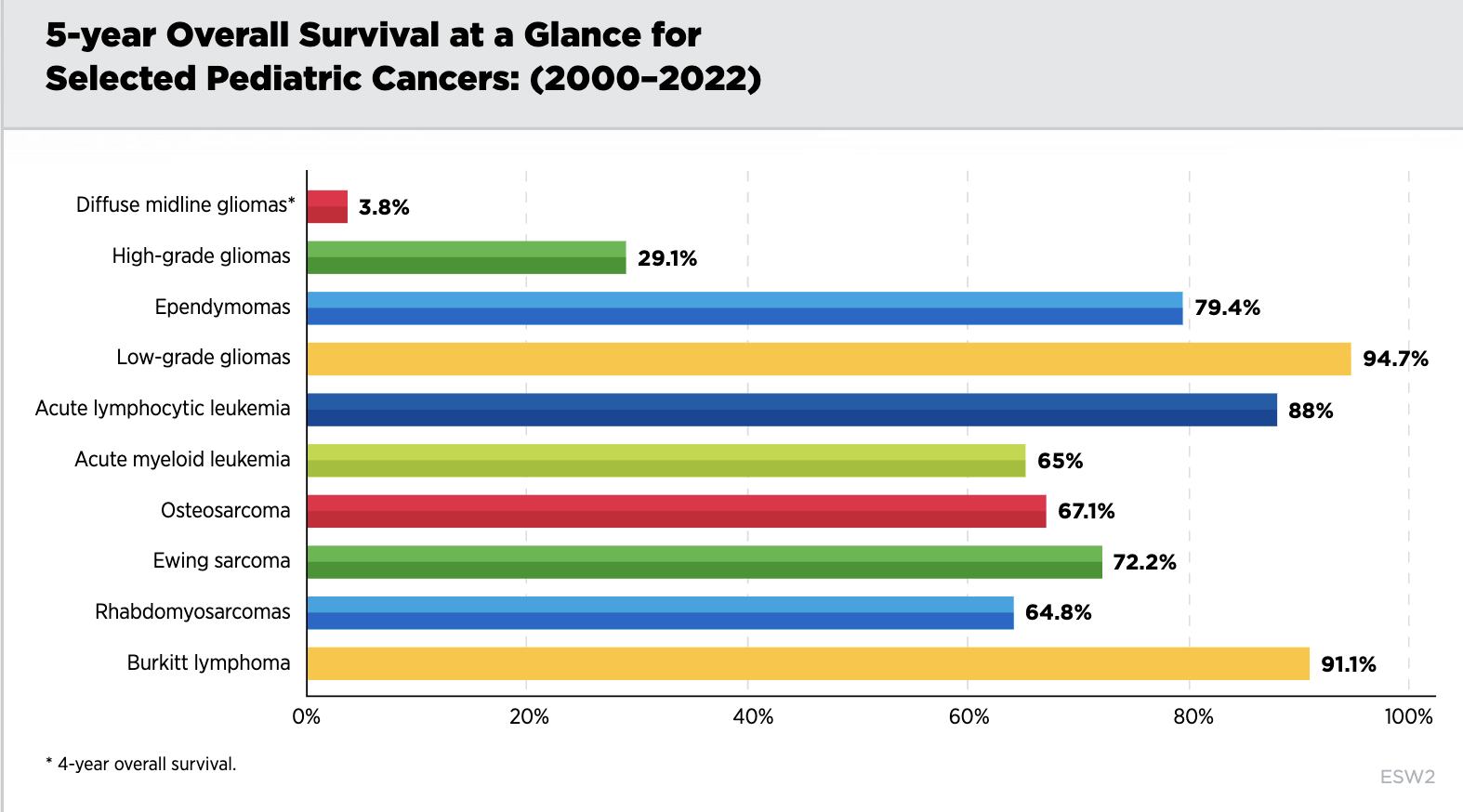
The 2025 report emphasizes the need for greater research into pediatric cancers, which are rare and often understudied. It highlights advances in precision medicine, immunotherapy, targeted treatments, and genomic profiling that have improved outcomes for children and adolescents with cancer. In the United States, the 5-year survival rate for pediatric cancers increased from 63% in the 1970s to 87% between 2015 and 2021. Cancer mortality among children and adolescents fell by 57% from 1970–2000 and an additional 19% from 2001–2023, largely due to collaborative research efforts and improvements in treatment and supportive care. Despite this progress, nearly 15,000 children and adolescents were expected to be diagnosed with cancer in the U.S. in 2025. AACR’s inaugural report also suggests that *investment* in equitable childhood cancer care could avert 6.2 million deaths and yield nearly $2 Billion in lifetime productivity gains by 2050.
Recommendation 1: Increase funding for pediatric cancer research, specifically for rare and understudied cancers
Recommendation 2: Improve access to innovative therapies, such as targeted treatments and immunotherapies, for all pediatric patients
Recommendation 3: Foster global and public–private partnershipsto accelerate pediatric cancer research and the development of innovative treatments for pediatric cancer patients.
Recommendation 1: Increase funding for pediatric cancer research, specifically for rare and understudied cancers
Recommendation 2: Improve access to innovative therapies, such as targeted treatments and immunotherapies, for all pediatric patients
Recommendation 3: Foster global and public–private partnershipsto accelerate pediatric cancer research and the development of innovative treatments for pediatric cancer patients.
Our Perspective:
(1) There are still ongoing challenges with underfunding, and federal support through the reauthorization of initiatives such as the Childhood Cancer STAR Act allocates relatively less funding for extramural (non-government) research
(2) Pediatric cancer patients are receiving improved access to innovative therapies. Regulatory approvals are continuously extending to younger age groups, reducing wait times for patients. Additionally, there have been victories with the development of new drugs such as Unituxin, an immune-based treatment for children with high-risk neuroblastoma – and renewal of the Pediatric Priority Review Voucher is a help … so long continuation of the program is not at risk
(3) Public-private partnerships are suggested in nearly every consensus statement from any organization, dating back to the early 2000’s. We believe the Daems model is key, and this model’s time has come.
(2) Pediatric cancer patients are receiving improved access to innovative therapies. Regulatory approvals are continuously extending to younger age groups, reducing wait times for patients. Additionally, there have been victories with the development of new drugs such as Unituxin, an immune-based treatment for children with high-risk neuroblastoma – and renewal of the Pediatric Priority Review Voucher is a help … so long continuation of the program is not at risk
(3) Public-private partnerships are suggested in nearly every consensus statement from any organization, dating back to the early 2000’s. We believe the Daems model is key, and this model’s time has come.