
Our Perspective:
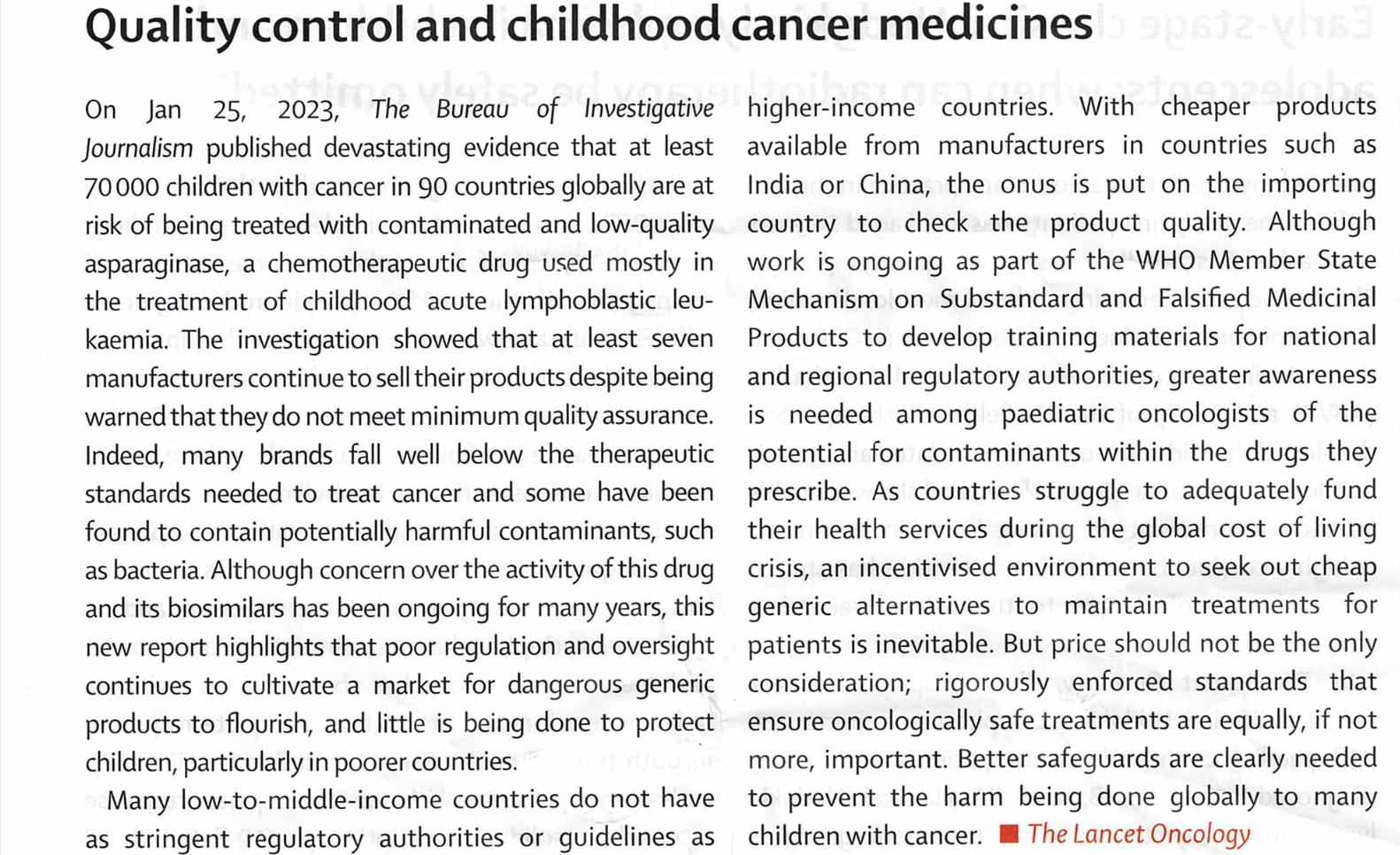
Recommendation 1: Governments in low and middle-income countries are increasingly adopting stricter regulations and higher quality standards for cancer medicines. Many countries use the World Health Organization Prequalification of Medicines Programme to identify quality-assured, safe, and effective generic and biosimilar cancer drugs. However, many countries have yet to implement these standards because of barriers such as cost, limited regulatory capacity, and inadequate infrastructure.
Recommendation 2: Manufacturers that knowingly sell medicines that fail to meet quality standards can face significant, though often delayed, consequences, including legal settlements, criminal indictments, and regulatory sanctions. In 2018, AmerisourceBergen (and its subsidiaries), one of the world’s largest wholesale drug distributors, was found to have distributed unapproved, misbranded, and adulterated chemotherapy and oncology-supportive drugs, including Kytril and Aloxi, that had been repackaged in unsterile conditions. As a result, the company agreed to a $625 million global settlement with the United States Department of Justice and state programs.
Recommendation 3: High-quality cancer drug manufacturing facilities are being developed in low and middle-income countries. In sub-Saharan Africa, the World Health Organization, the African Union, and the World Bank’s AIM 2030 initiative are working to expand local manufacturing capacity, increase self-reliance, and enable countries to produce a substantial share of their health products domestically. In addition, the WHO launched the WHO Biomanufacturing Workforce Training Initiative to strengthen the skills of local scientists and build technical expertise in low and middle-income countries.
Additionally, we would like to highlight the efforts of organizations working to address this issue. Angels for Change is a nonprofit dedicated to ending drug shortages. In partnership with Mark Cuban Cost Plus Drug Company and Mark Cuban, Angels for Change awarded a 2025 Project PROTECT grant to a 503B outsourcing facility operated by the company. This partnership will accelerate the production of two critically important chemotherapy drugs, Carboplatin Injection and Methotrexate Injection, both of which are currently in a severe national shortage. Their goal is to ensure timely access to these lifesaving medications for patients and healthcare providers across the country. Another organization working to combat this issue is Civica Rx, a nonprofit generic drug company created to reduce drug shortages and lower the cost of vital medications, making these medicines more accessible and affordable for patients. Founded in 2018, it is supported by more than 120 health organizations, along with several philanthropic foundations. These initiatives will hopefully help address the problem of substandard medicines being administered to children in poorer countries.
In conclusion, ensuring access to safe and effective childhood cancer treatments in low and middle-income countries requires stronger regulations, stricter accountability for manufacturers, and expanding local drug production. Although organizations such as World Health Organization, Civica Rx, and Angels for Change are making important progress, continued international cooperation and investment are essential to protect children with cancer around the world. Nonetheless, we applaud the efforts of Cost Plus and Civica Rx who step in for children and cancer patients of all nations.