
Redefining a Pediatric Cancer Drug Development
The whitepaper on Redefining a Pediatric Cancer Drug Development (here) is not peer-reviewed, and is greatly reminiscent of the iconic 11-year old video by Noah’s Light Foundation, but given the group is in the ecosystem, we summarize and give a perspective on the whitepaper here:
Summary
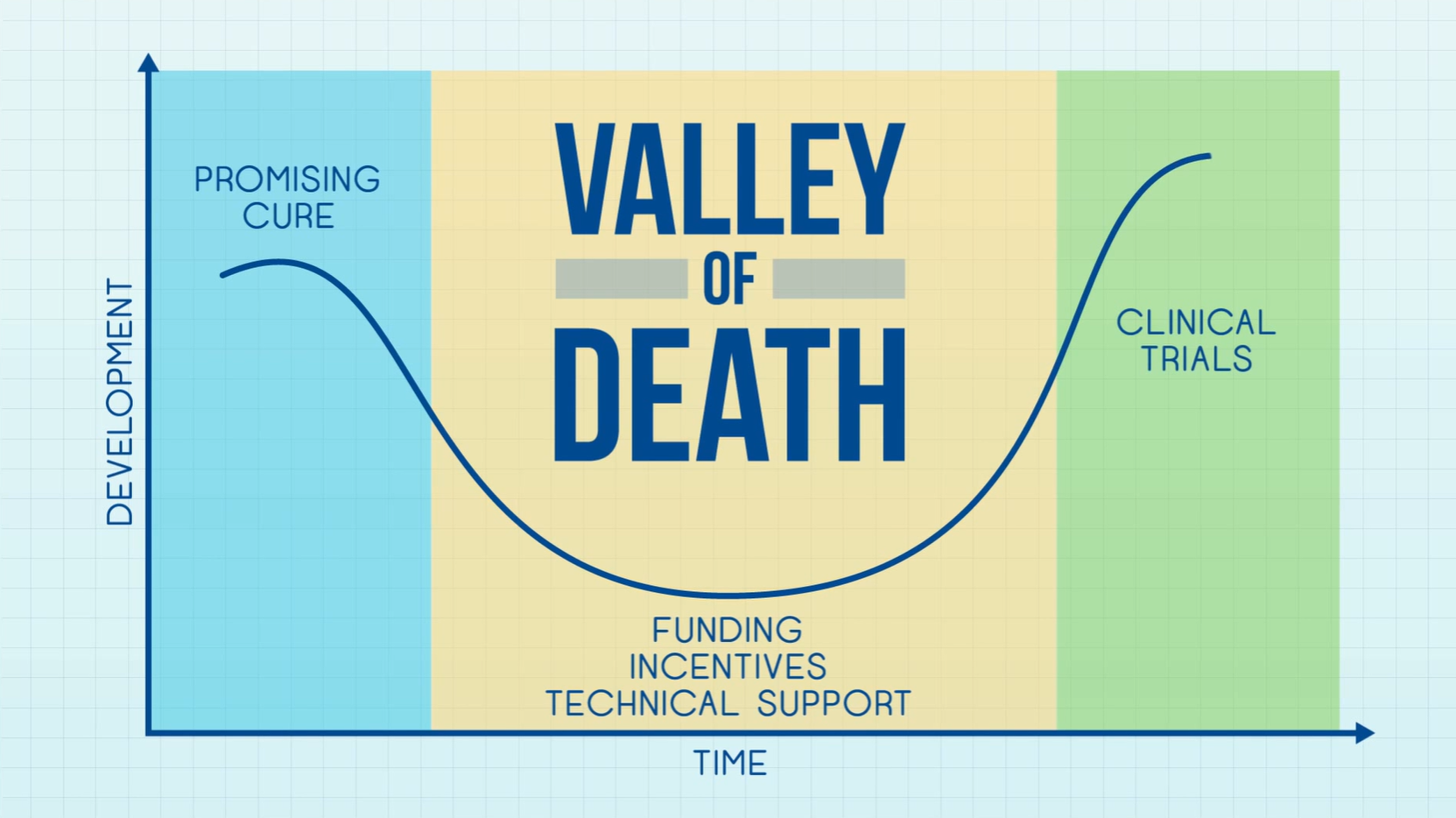
The authors cite the failure to develop childhood cancer treatments due to lack of support. An assertion is that main issue isn’t a lack of scientific discoveries, but the failure to turn those discoveries into actual treatments. While early research is funded by public and philanthropic sources, the later stage, clinical drug development, depends on industry support, which is often lacking. As a result, many promising treatments stall in the “valley of death” due to a disparity in industry focus, incentives, and ownership. The approach suggested is strong partnerships with academic hospitals and funding from mission-driven sources such as foundations, family offices, impact investors, and venture philanthropy groups.
Recommendation 1: Establishing stronger financial incentives for pharmaceutical companies should be created, to garner more funding to address the lack of funding for clinical drug development (presumably governments could offer tax credits, extended patents, or priority review vouchers to encourage these companies to invest).
Recommendation 2: Expanding public-private partnerships, so that every part of the process of researching and developing cures runs more smoothly and efficiently. This means increasing collaboration between biotech companies and academic hospitals, if not also foundations.
Our Perspective
Recommendation 1: In part through visionary action on the part of a childhood cancer parent, there have been significant financial incentives established to encourage pharmaceutical investment in childhood cancer drugs, primarily through U.S. legislation. Incentives include the Creating Hope Act, and the Orphan Drug Act tax credits/exclusivity. With the Creating Hope Act, companies that develop and receive FDA approval for drugs treating rare pediatric diseases, including childhood cancers, may be granted a Priority Review Voucher (PRV). This voucher allows the company to fast-track the FDA review process for another drug, often one with higher commercial value, or it can be sold to another company for a significant financial return, in some cases exceeding $100 million. The Orphan Drug Act provides incentives for developing treatments addressing rare diseases, childhood cancers included. These incentives include seven years of market exclusivity once a drug is approved, tax credits for clinical trial costs, and waivers of FDA application fees, all of which are designed to encourage companies to invest in treatments for rare conditions.
Recommendation 2: Public-private partnerships in childhood cancer research are being expanded due to initiatives such as the CC-DIRECT (introduced by the National Cancer Institute), and the Advanced Research Projects Agency for Health (ARPA-H). The CC-DIRECT program aims to establish a standardized, shared health record for better care and research. ARPA-H is investing $50 million in the Pediatric Care eXpansion (PCX) to connect over 200 hospitals for sharing clinical data, starting with brain cancer. A very important concern, however, of academic clinical trials is that the endpoint is often futility, feasibility or signal-seeking (e.g., basket trials); instead, designing and statistically-powering a clinical trial for efficacy is what pharmaceutical companies do best – giving a clear yes/no answer to whether a drug works.
Overall, while childhood cancer research has produced important scientific discoveries, the greatest challenge remains translating those discoveries into effective treatments. The lack of consistent support for clinical drug development has slowed progress and left many promising therapies untested. By well-designed clinical trials with yes/no efficacy readouts, more life-saving treatments can be brought to children faster and more efficiently.