
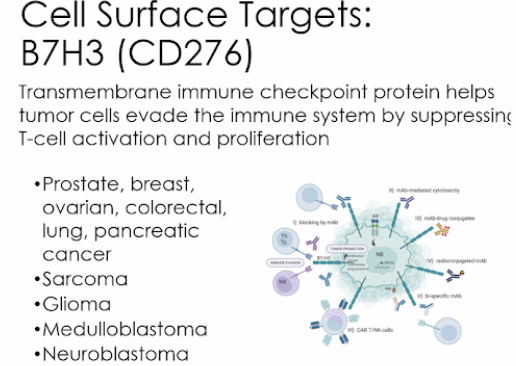
Drs Fox and Drezner discussed progress and challenges in developing treatments for childhood cancer. Dr Fox presents on researchers exploring targeted therapies, such as antibody-drug conjugates (ADCs), that target cancer markers like B7H3 (CD276), which is found on several pediatric and adult tumors. The speakers also emphasized the importance of collaboration because childhood cancers are rare and clinical trials often have small patient populations. Dr. Drezner conveyed that the FDA has approved more than 50 oncology drugs for children (as primary or secondary indications), but significant treatment needs remain. While the FDA holds children and adults to the same standards for drug effectiveness, the FDA allows flexibility in clinical trial design when appropriate. Policymakers have also introduced laws and regulatory programs to help improve pediatric drug development.
Lucy and our team’s takeaways are:
Recommendation 1: Requiring earlier pediatric testing when adult cancer drugs target pathways that are also found in childhood cancers.
Recommendation 2: Prioritizing targeted therapies that focus on cancer-specific markers while limiting damage to healthy cells.
Recommendation 3: Improving data sharing between research institutions so scientists can learn from more pediatric patients and speed up drug development.
Our Perspective is:
Recommendation 1: Under the RACE for Children Act, which was established in August 2020, drug developers targeting specific molecular pathways in adult cancers must study those therapies in children as well if the target is relevant to childhood cancers – a boon for children.
Recommendation 2: Modern cancer research and clinical care heavily prioritizes targeted therapies that limit damage to healthy cells, however, this is not universal. CD276 (B7H3) is a more than reasonable target, as Dr Fox suggests.
Recommendation 3: Thanks to projects like the Pediatric Cancer Data Commons, and the Pediatric Trials Network, data sharing between research institutions is actively being improved.
Overall, the webinar displayed that new targeted therapies and increased collaboration are creating promising opportunities for childhood cancer treatment. However, challenges such as small patient populations, limited funding, and differences between pediatric and adult cancers continue to slow drug development. By increasing funding, encouraging collaboration, and using more flexible clinical trials, researchers and regulators can help bring safe and effective treatments to children faster.