
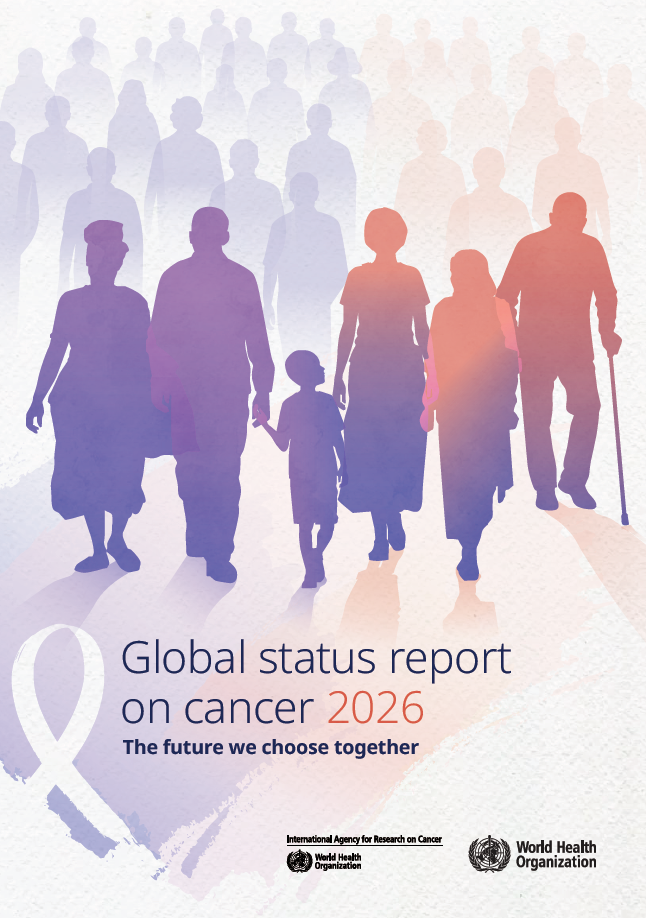
The 2026 World Health Organization Global status report on Cancer examines the global burden of cancer and emphasizes the significant inequities in its impact across countries and populations. It describes the financial, psychological, and social stresses faced by patients and caregivers, including mental health issues, loss of income, and barriers to accessing care. Although progress has been made in cancer prevention and control through policies such as tobacco control, HPV vaccination, and early detection programs, major implementation gaps still remain. Many countries lack access to essential cancer services, and high out-of-pocket costs prevent many patients from completing critical treatment. The report also emphasizes systemic challenges, including underinvestment in prevention, unequal access to diagnostics and treatments, workforce shortages, and research funding that is driven more by commercial success than by improving patient care.
Recommendation 1: Support patients and caregivers to reduce financial and mental stresses.
Recommendation 2: Reduce financial barriers to care to ensure patients can complete treatments without experiencing financial hardship.
Recommendation 3: Invest in the cancer workforce to improve treatment outcomes and potential new treatments.
Our Perspective:
Recommendation 1: Programs such as the CancerCare Co-Payment Assistance Foundation and the Patients Advocate Foundation help offset medication and treatment costs. Additionally, organizations such as the American Cancer Society and Cancer Support Community offer free counseling, support groups, and resources specifically for caregivers.
Recommendation 2: Financial barriers remain high, despite efforts by organizations such as the foundations listed above.
Recommendation 3: Organizations such as the American Association for Cancer Research (AACR) and the Prevent Cancer Foundation offer fellowships and grants to support the career development of early-career scientists and established clinical researchers. Additionally, major health bodies such as the President’s Cancer Panel are expanding training pathways.
In conclusion, this report calls on stakeholders to implement key actions, in order to actualize the three shifts needed in global cancer control: better capabilities, better protections, and better value.
Recommendation 1: Support patients and caregivers to reduce financial and mental stresses.
Recommendation 2: Reduce financial barriers to care to ensure patients can complete treatments without experiencing financial hardship.
Recommendation 3: Invest in the cancer workforce to improve treatment outcomes and potential new treatments.
Our Perspective:
Recommendation 1: Programs such as the CancerCare Co-Payment Assistance Foundation and the Patients Advocate Foundation help offset medication and treatment costs. Additionally, organizations such as the American Cancer Society and Cancer Support Community offer free counseling, support groups, and resources specifically for caregivers.
Recommendation 2: Financial barriers remain high, despite efforts by organizations such as the foundations listed above.
Recommendation 3: Organizations such as the American Association for Cancer Research (AACR) and the Prevent Cancer Foundation offer fellowships and grants to support the career development of early-career scientists and established clinical researchers. Additionally, major health bodies such as the President’s Cancer Panel are expanding training pathways.
In conclusion, this report calls on stakeholders to implement key actions, in order to actualize the three shifts needed in global cancer control: better capabilities, better protections, and better value.
Notable other findings in the WHO Report:
– low income countries have nearly half the cancer survival of high income ones (45% vs >85%)
– preventing adult cancer starts in children (limiting tobacco & alcohol, HPV vaccine, preventing obesity) … 38% of cancers are preventable by these measures!
– 2.5 billion adults are overweight or obese, and less than 30% of teens are active enough and a healthy enough diet to avoid the same fate
– millions of children become orphaned when their parents die of cancer.