

Glioblastoma Brain Cancer
Glioblastoma (GBM) is the most aggressive and common form of primary malignant brain tumor in adults. GBM arises from glial cells—specifically astrocytes—which normally support and protect neurons in the brain. Classified as a Grade IV tumor by the World Health Organization, glioblastoma is characterized by rapid growth, high invasiveness, and a strong resistance to most conventional therapies.
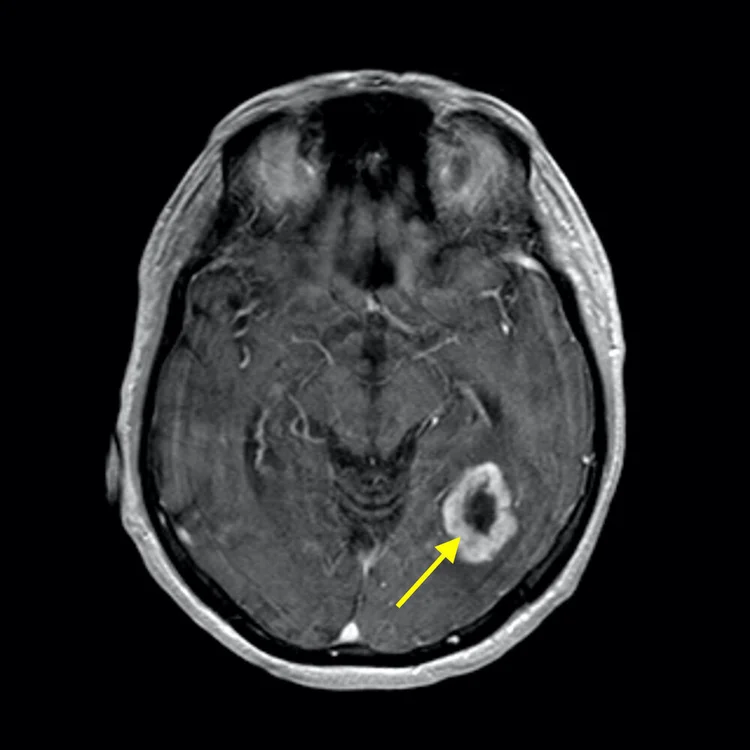
glioblastoma
Difficult to treat Brain Cancer
One of the defining features of glioblastoma is its ability to infiltrate surrounding brain tissue. Unlike many other cancers that form well-defined masses, GBM spreads in a diffuse, finger-like pattern, making it nearly impossible to remove completely through surgery. Even when imaging suggests a successful resection, microscopic tumor cells almost always remain, leading to recurrence.
Clinically, symptoms of glioblastoma vary depending on the tumor’s location in the brain. Common signs include persistent headaches, seizures, cognitive or personality changes, weakness on one side of the body, and difficulties with speech or vision. Because these symptoms can initially be subtle or mistaken for other conditions, diagnosis often occurs after the disease has already progressed.
The current standard of care typically involves a combination of maximal safe surgical resection, followed by radiation therapy and chemotherapy—most commonly with the drug Temozolomide. This multimodal approach, sometimes referred to as the Stupp protocol, can modestly extend survival and improve quality of life. However, despite aggressive treatment, glioblastoma almost invariably recurs.
On a molecular level, glioblastoma is highly heterogeneous, meaning that even within a single tumor, there can be multiple distinct populations of cancer cells with different genetic mutations and behaviors. Common molecular features include alterations in genes such as EGFR, PTEN, and TP53, as well as epigenetic changes like MGMT promoter methylation, which can influence how well a patient responds to chemotherapy. This complexity contributes significantly to treatment resistance and makes the development of effective therapies particularly challenging.
Another major obstacle in treating glioblastoma is the blood-brain barrier, a protective system that restricts the passage of many substances from the bloodstream into the brain. While essential for normal brain function, this barrier also limits the ability of many drugs to reach tumor cells in effective concentrations.
Prognosis for glioblastoma remains poor. The median overall survival is approximately 12 to 15 months following diagnosis, with less than 10% of patients surviving beyond five years. Factors such as patient age, overall health, extent of surgical resection, and specific molecular characteristics can influence outcomes.
Despite these challenges, ongoing research is actively exploring new treatment strategies. These include targeted therapies, immunotherapy approaches such as checkpoint inhibitors and cancer vaccines, tumor-treating fields (TTF), and experimental modalities like gene therapy and oncolytic viruses. While progress has been incremental, advances in understanding the biology of glioblastoma continue to open new avenues for potential breakthroughs.
In summary, glioblastoma is a highly complex and devastating disease that exemplifies the challenges of modern oncology. Its aggressive nature, resistance to treatment, and biological diversity make it one of the most difficult cancers to treat, underscoring the urgent need for continued innovation and research.